
June 13th, 2026 • 5 mins read
Mentorship and Career Development for Teenagers
Many parents today are searching for ways to prepare their teenagers for an ever-changing future. While exploring this question, they can find valuable insights in Inwesol's article, "How to Prepare Teenagers for the Future".
Beyond marks and skills, teenagers need mentorship. Whether from parents, teachers, or trusted adults, career coaches and mentors help young people build confidence, develop a growth mindset, and navigate challenges with resilience.
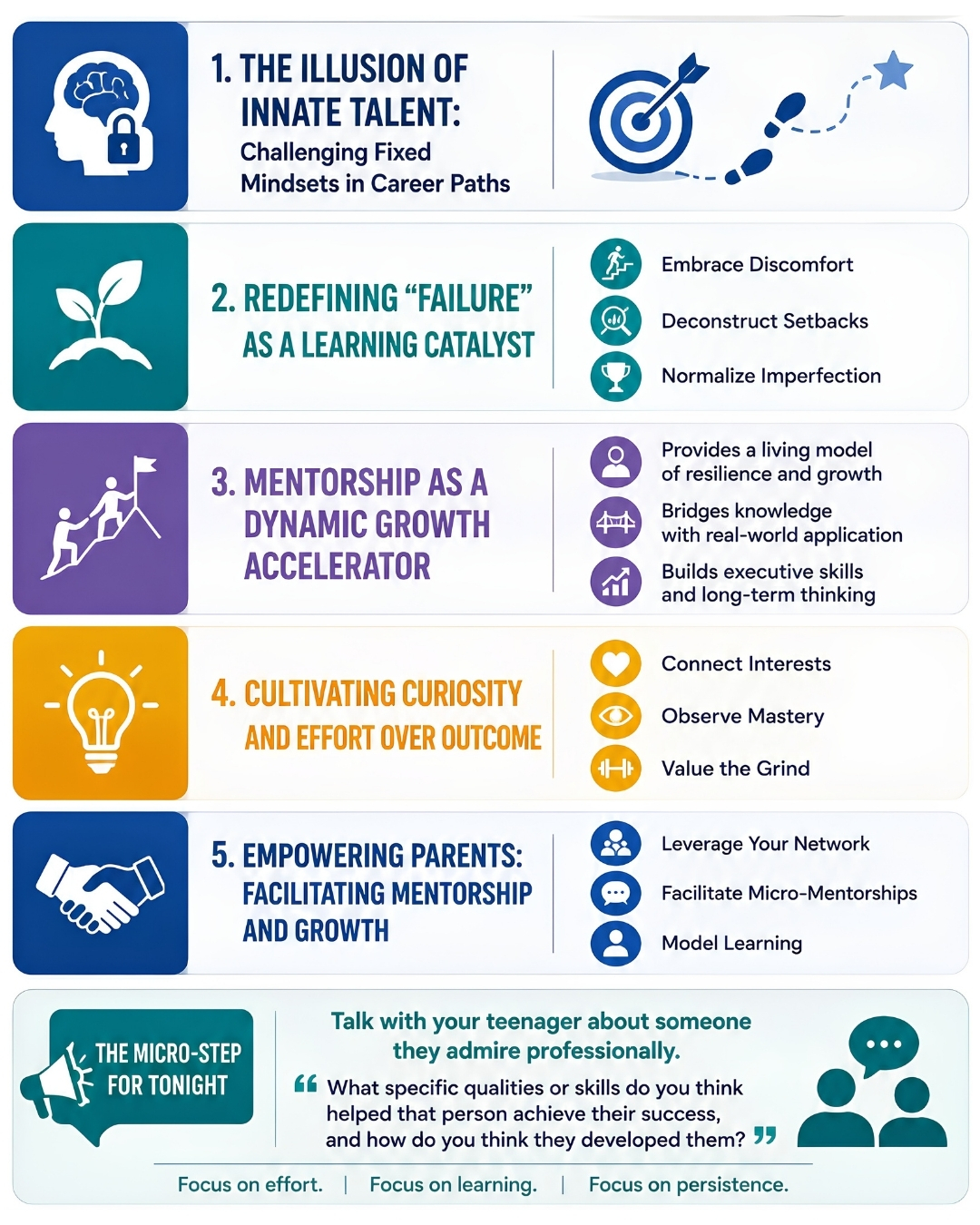
1. The Illusion of Innate Talent: Challenging Fixed Mindsets in Career Paths
Teenagers often internalize the belief that success in a field stems from an innate, fixed talent rather than dedicated effort and strategic learning. This fixed mindset hinders genuine exploration and leads to premature disengagement when initial difficulties arise. Rather than viewing career exploration as a quest for a predetermined "calling," we must reframe it as an iterative process of experimentation and skill development.
2. Redefining "Failure" as a Learning Catalyst
True progress emerges not from avoiding mistakes, but from robust engagement with challenges and reflecting on their outcomes. Many adolescents develop performance anxiety (a fear of not meeting expectations), which can paralyze career exploration. Mentorship, especially when grounded in a growth mindset, provides a safe harbor for experimentation and "failing forward."
Embrace Discomfort: Encourage your teen to seek out mentors in fields that intrigue them, even if they initially feel unqualified. This active pursuit builds self-efficacy and familiarity with professional networking.
Deconstruct Setbacks: When a project doesn't go as planned, help your teen analyze the process, identify specific areas for improvement, and integrate these lessons. Mentors can offer an invaluable third-party perspective here.
Normalize Imperfection: Celebrate the effort and learning involved in the process, not just the outcome. This shifts focus from a fixed result to the continuous journey of improvement.
3. Mentorship as a Dynamic Growth Accelerator
A mentor provides more than advice; they offer a living model of sustained effort, strategic resilience, and adaptive learning. This exposure is critical for adolescents whose brains are still developing executive functions and long-term planning capabilities. A mentor acts as a bridge between theoretical knowledge and real-world application, offering context and practical strategies.
4. Cultivating Curiosity and Effort Over Outcome
Genuine interest and sustained effort, not just raw intelligence, are the true drivers of professional excellence. A mentor can illuminate diverse career pathways and help teenagers connect their academic learning to tangible industry applications. They inspire by example, demonstrating that mastery is a result of persistent work and intellectual curiosity.
Connect Interests: Help your teen identify areas of genuine curiosity and then seek mentors who embody that passion in their professional lives. This makes the learning process intrinsically motivating.
Observe Mastery: Encourage shadowing or informational interviews where your teen can witness a mentor's daily routines and problem-solving approaches. This demystifies the path to expertise.
Value the Grind: Highlight stories of mentors' struggles and how they overcame them through perseverance. This reinforces the idea that hard work is the pathway to skill acquisition and impact.
- The core insight for parents is that mentorship is not about finding "the perfect job," but about cultivating a resilient, adaptable learner.
- It shifts the focus from a fixed destination to an ongoing journey of skill development and iterative growth.
- Mentors provide the living curriculum for developing a true growth mindset in a volatile career landscape.
5. Empowering Parents: Facilitating Mentorship and Growth
Parents play a pivotal role in demystifying the professional world and connecting their teenagers with valuable mentors. This involves leveraging their own networks and teaching their children the art of professional engagement. Modern career development requires ‘proactive self-advocacy’ and the ability to seek out learning opportunities.
Practical Steps for Guiding Your Teen
1. Leverage Your Network: Reach out to colleagues, friends, or alumni who work in fields of interest to your teen. A warm introduction significantly lowers the barrier to entry for a potential mentorship.
2. Facilitate Micro-Mentorships: Suggest short, low-pressure engagements like informational interviews, a single project collaboration, or shadowing for a few hours. These small commitments are easier to secure and build confidence.
3. Model Learning: Share your own professional challenges and how you navigated them. This transparency helps normalize struggle and demonstrates the value of lifelong learning and adapting to new situations.
The goal isn't just to find a mentor but to embed a mindset in your teenager where they actively seek guidance, embrace challenges, and understand that their capabilities are not fixed, but expandable through dedication and learning.
The Micro-Step for Tonight
Tonight, initiate a conversation with your teenager about someone they admire professionally, either a public figure or someone you know. Ask them: "What specific qualities or skills do you think helped that person excel, and how do you think they developed them?" Focus the discussion on effort, learning, and persistence rather than innate talent.
